
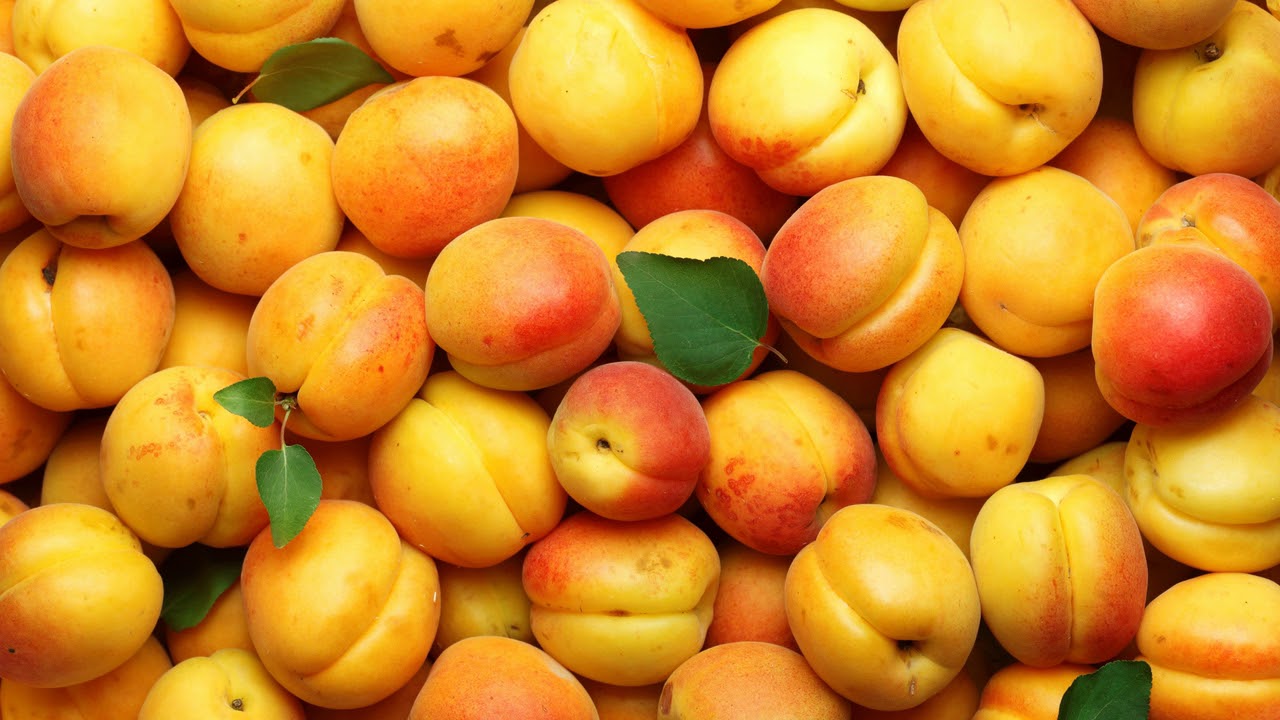
The tree is relatively large, typically reaching 8 to 15 meters in height, while some Central Asian varieties may grow up to 20 meters. Its leaves are oval and serrated, and its flowers are white or pale pink, bisexual, and bloom before the leaves appear. The fruit is a drupe, with the stone making up about 8 to 12 percent of the total fruit volume. Depending on the variety and degree of ripening, the fruit may be whitish, orange on the sun-exposed side, reddish, or saffron-colored. It is usually round-oval or elongated in shape, juicy, and fragrant, and it ripens in early June.
The root system is strong and well developed. The roots are often described as having a pinkish-red or purplish tint and penetrate deep into the soil, which helps the tree withstand dry conditions.
Apricot is valued not only as a fruit crop, but also as an important source of fresh fruit, dried fruit, and raw material for processing. In many regions of Central Asia, including Tajikistan, it holds significant economic and dietary importance. Apricot fruits are rich in sugars, organic acids, vitamins, and mineral substances, while the kernels of some varieties are also used in the food industry and in traditional practices.
For this reason, apricot has long been regarded as one of the most important and characteristic fruit crops of Central Asian horticulture.